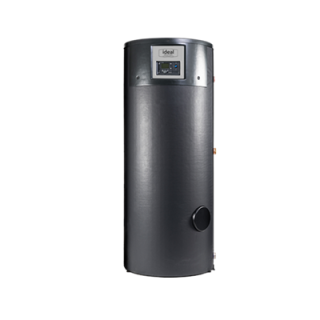
Stainless steel has become an increasingly popular choice for domestic hot water heaters used on commercial sites. With water heaters operating in direct contact with potable water, often at high temperatures and over many years, the material used in their construction can have a significant impact on durability, maintenance requirements and long-term performance. So, what makes stainless steel such a suitable choice?
Why does it matter what material a water heater is made from?
A domestic hot water heater for commercial use works in direct contact with potable water, often at high temperatures and for many years. The material used for the vessel and heat exchanger therefore has an important influence on durability, maintenance requirements and service life[HT1] .
Corrosion is one of the main threats to any water heater. CIBSE’s ‘Guide G Public health and plumbing engineering’ defines corrosion as the reaction of metal with its environment resulting in damage which impairs the function of a component or system.
Once corrosion has started it is impossible to stop, it can only be slowed down but it will continue to progress. Stainless steel contains chromium, which forms a thin protective layer on the surface of the metal through oxidation and helps protect it against corrosion, without additional protective measures required.
Is stainless steel more corrosion-resistant than enamelled steel?
Stainless steel has the advantage of being inherently corrosion resistant, which makes for greater durability and reduced maintenance requirements over the life of the product.
Enamelled or glass-lined steel water heaters, on the other hand, rely on a protective coating over the underlying steel and usually require additional corrosion protection.
Does water quality affect the choice of water heater?
Yes. Water composition varies significantly throughout the UK and should always be considered when selecting a domestic hot water heater for commercial use.
Hard water contains higher levels of minerals such as calcium and magnesium, which can create scale when heated. Scale can build up on heat-transfer surfaces, acting as an insulator and potentially increasing energy use and recovery times. The surface underneath a scale deposit will also become an aggressive environment which can cause corrosion to begin to occur.
Soft water presents a different challenge. Soft water naturally has a lower pH value which means it is more acidic in its composition. This type of water is naturally more aggressive towards metals, and it can cause corrosion to start quickly.
Stainless steel's corrosion resistance is advantageous across a wide range of water conditions. Our EQMAX condensing domestic hot water heater range has been successfully tested for operation in very hard water conditions of up to 350mg/l of calcium carbonate, giving contractors greater confidence when selecting equipment. Although stainless steel is extremely durable, it isn't completely invincible. The inclusion of a powered anode to the EQMAX water heater gives an additional level of corrosion resistance within the water heater, especially within hard water environments.
What other benefits does stainless steel offer?
Durability is one of its principal advantages, but there are other benefits too.
Stainless steel water heaters can be lighter than traditional alternatives, which makes transportation, handling and installation easier, particularly in existing plant rooms where access may be impeded.
Its smooth surface can also help reduce sediment accumulation and make cleaning easier. When lining mild-steel tanks to create enamelled steel the manufacturing process is complex, and a smooth internal finish is difficult to achieve.
What does stainless steel mean over the life of the water heater?
The benefits of stainless steel are not only about initial product choice. Its durability, corrosion resistance and relatively low maintenance requirements can contribute to strong whole-life value and performance over many years of operation.
Ideal Commercial Heating's EQMAX condensing domestic hot water heater range uses stainless steel construction, combining this durability with a range of outputs and storage capacities designed to suit different commercial site requirements. Find out more here.