
If you work with commercial heat pumps, you’ll already be familiar with Global Warming Potential (GWP) as a way of comparing the climate impact of different refrigerants used within heat pumps. But you may have noticed that some published GWP figures are beginning to change.
The reason is not that the refrigerant itself has changed, but that the science used to calculate its environmental impact has been updated. The HVAC industry is gradually moving from GWP figures based on the Intergovernmental Panel on Climate Change’s (IPCC) fifth Assessment Report, known as AR5, to the newer sixth Assessment Report, AR6.
In this article authored by Jason Allen, Commercial Product Manager – Heat Pumps, Ideal Commercial Heating we discuss what has changed, why does it matter, and what should specifiers and installers look out for when comparing commercial heat pump refrigerants?
What are AR5 and AR6?
AR stands for Assessment Report. These are climate science assessments published periodically by the IPCC. For the HVAC industry, they are important because they provide the science behind the GWP values assigned to refrigerants, including those used in heat pumps.
GWP is a way of comparing the potential climate impact of different greenhouse gases. Carbon dioxide (CO₂) is used as the benchmark and given a GWP of 1. A gas with a GWP of 100, for example, would have 100 times the warming impact of CO₂ over the defined assessment period, normally 100 years.
AR5 was published in 2014 and its figures became widely adopted across the HVAC industry. AR6 represents the IPCC’s newer scientific assessment, with its Working Group I report published in 2021.
Why have GWP figures changed?
The important point is that the refrigerants themselves have not changed. What has improved is our scientific understanding of their effect on the atmosphere.
Newer atmospheric modelling gives scientists a better understanding of factors including atmospheric chemistry, how gases absorb infrared radiation, how they break down and how they interact with the climate. AR6 also improves the way some indirect atmospheric effects are accounted for.
The result is that some refrigerants now have noticeably different GWP figures.
What does this mean for R290?
Under AR5, R290 (also known as propane) had a GWP of 3. Under AR6, this falls dramatically to just 0.02. This reflects a better understanding of propane’s very short atmospheric lifetime and extremely low long-term warming effect.
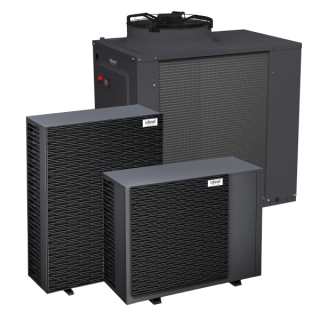
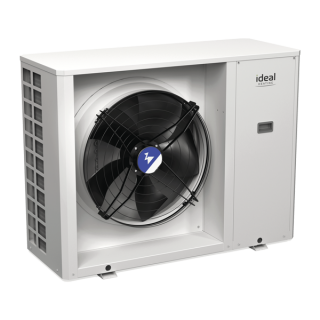
For anyone considering an R290 commercial heat pump, such our ECOMOD 290HT, this reinforces one of its major advantages: its extremely low direct climate impact. It also helps explain why natural refrigerants are becoming increasingly important as the heating industry decarbonises.
Do all refrigerant GWP figures go down under AR6?
No. R32, for example, moves in the opposite direction. Its GWP increases from 675 under AR5 to 771 under AR6 because improved modelling has resulted in a higher estimate of its warming impact. CO₂, or R744, remains unchanged at GWP 1 because it is the reference gas against which other gases are measured.
Which figure should I use?
For the time being, you may continue to see both AR5 and AR6 figures quoted. Much existing regulation, certification and product literature was developed using earlier Assessment Report values, so the change cannot happen overnight.
For specifiers and installers, the main thing is to understand which Assessment Report a quoted GWP figure comes from when comparing products.
AR6 does not mean a refrigerant has suddenly become better or worse. It simply gives us a more up-to-date picture of its environmental impact and, as we make long-term choices about commercial heating systems, having the best available information can only help us make better-informed decisions.
For information on our range of ECOMOD air source heat pumps please click here