
How do you navigate the complexity of designing heating systems that meet the needs of users whilst reducing carbon emissions? Our new CIBSE-approved CPD - Low carbon hybrid heating system considerations – has been introduced to provide a pathway for specifiers and building services engineers to do just that.
The new CPD provides a practical, real-world overview of how hybrid and bivalent systems can support the decarbonisation of commercial buildings, while addressing the constraints that often limit the adoption of fully electric solutions.
What’s driving decarbonisation in commercial heating?
With heating responsible for a significant proportion of the UK’s carbon emissions, and the commercial sector accounting for around 20% of heat-related emissions, the CPD examines the key drivers behind the transition to low carbon heating, including net zero targets and evolving legislation.
What is covered in the new CPD?
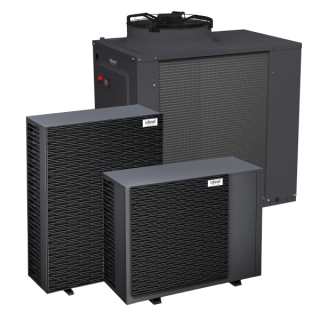
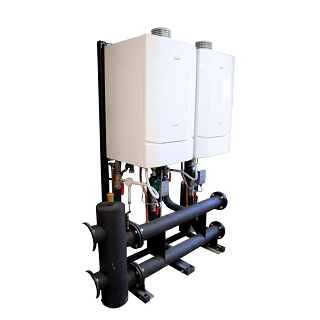
The session explores how combining commercial heat pumps with commercial gas boilers can provide a flexible and pragmatic route to reducing emissions. It highlights the differences between hybrid (parallel) and bivalent (switchable) systems, and how each approach can be applied depending on building requirements and operational priorities.
What are the practical considerations?
Importantly for specifiers and engineers working on both new build and retrofit projects, the CPD focuses on the practical considerations that influence system selection. These include system temperatures, heating circuit compatibility, electrical capacity, available plant space, and the challenges associated with integrating new technologies into existing infrastructure.
Why are hybrid systems becoming so popular?
A key theme throughout is the role of hybrid systems in enabling phased decarbonisation. Rather than requiring full system replacement, hybrid approaches allow engineers to incrementally introduce low carbon technologies, helping to manage capital expenditure, minimise disruption, and futureproof buildings for further upgrades.
What about DHW?
The CPD also addresses one of the most complex aspects of low temperature heating design: domestic hot water (DHW). It examines why DHW can present challenges in hybrid systems and outlines the growing trend towards decoupled solutions to optimise both performance and compliance.
Who is this CPD for?
Designed for a broad audience, including mechanical and building services engineers, consultants and contractors, the CPD provides a structured decision-making framework to support specification. It guides attendees through assessing building heat loads, evaluating electrical infrastructure, and determining whether a hybrid or fully electric approach is most appropriate.
Delivered by Ideal Commercial Heating’s experienced specification team, the CPD presentation is available both online and in person nationwide, offering flexible learning opportunities for industry professionals across the UK.
What other CPDs are available from Ideal Commercial Heating?
This latest addition strengthens our portfolio of CIBSE-approved CPDs, which are designed to support engineers and specifiers in responding to the rapidly evolving demands of commercial heating design. To learn more about Ideal Commercial Heating’s CPD programme, or to book a place, visit: CPD-courses.